
Nearly two hours.
It took Spain nearly two hours to score a goal after 20 shot attempts.
It took Argentina nearly two hours to get a shot attempt of any kind.
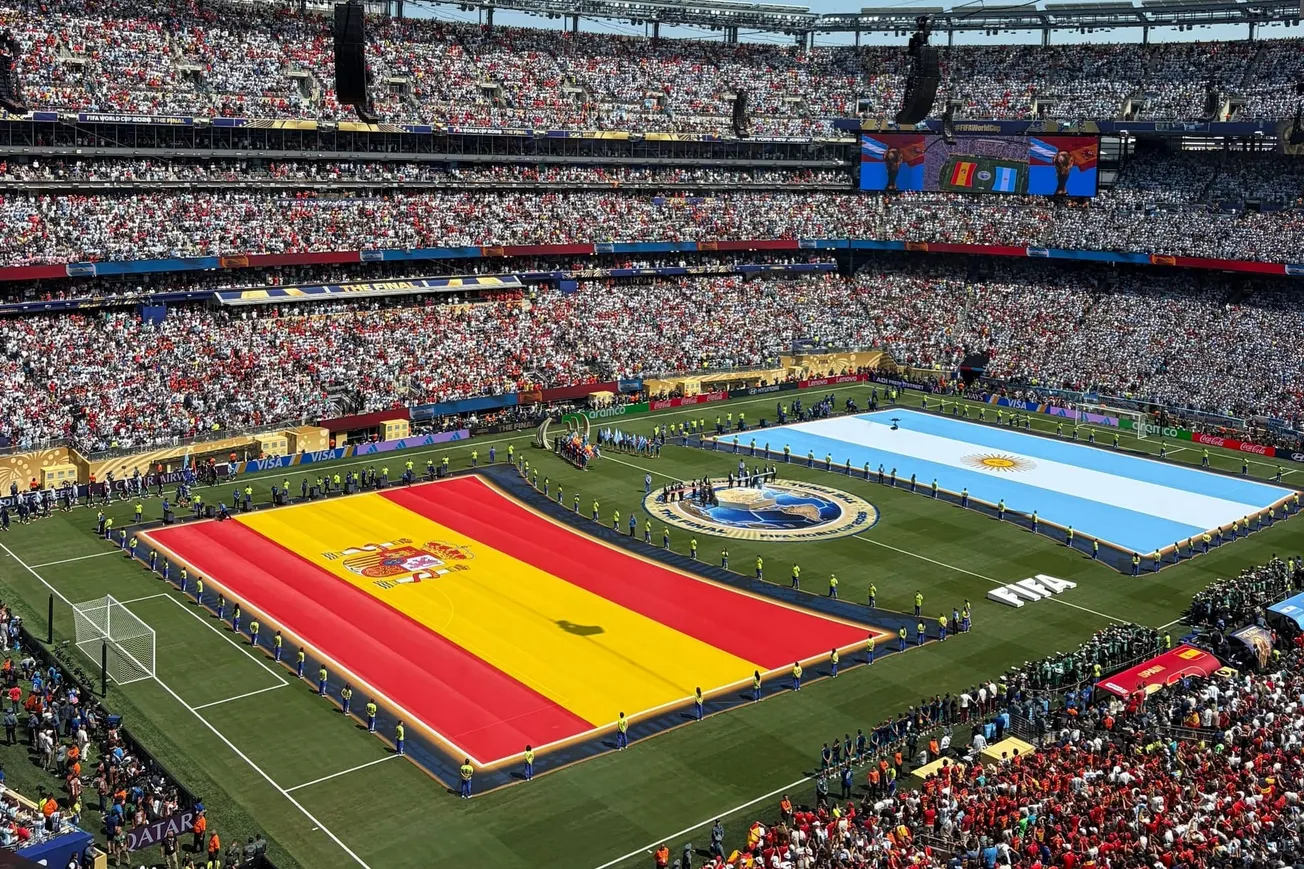
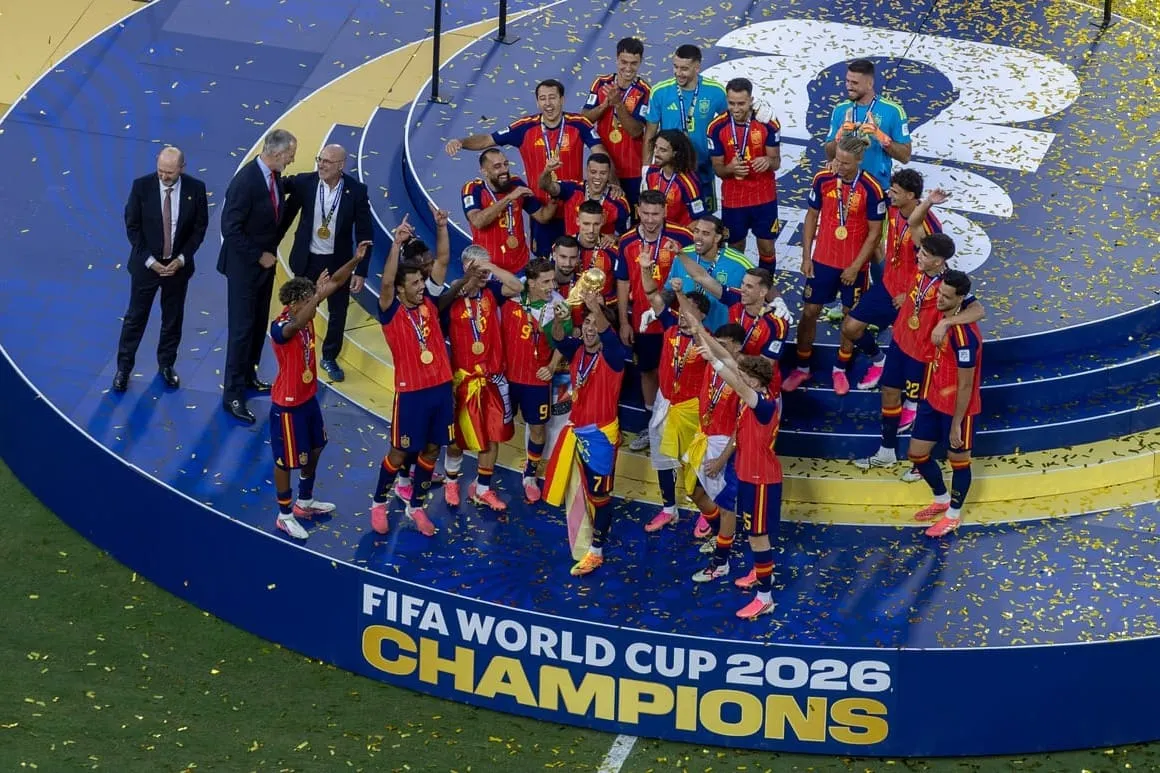
In the end, Ferran Torres scored early in the second half of extra time to give Spain a 1-0 win over Argentina in the 2026 FIFA World Cup Final in East Rutherford, New Jersey.
The defending European champions win their second World Cup title and first since 2010, denying Argentina a repeat as world champions. Spain also becomes the first nation to hold both the men's and women's World Cup trophies simultaneously.
On the other side, it was a woeful Argentina performance, with a few late chances to equalize likely to haunt a few players. This was also likely the last we will see of 39-year-old Lionel Messi as a World Cup competitor. Four years after leading Argentina to glory, Messi's last moments in the competition will likely end up a footnote in his legacy.
Then again, is it surprising that a team with two Major League Soccer players starting didn't win the World Cup? Maybe not.
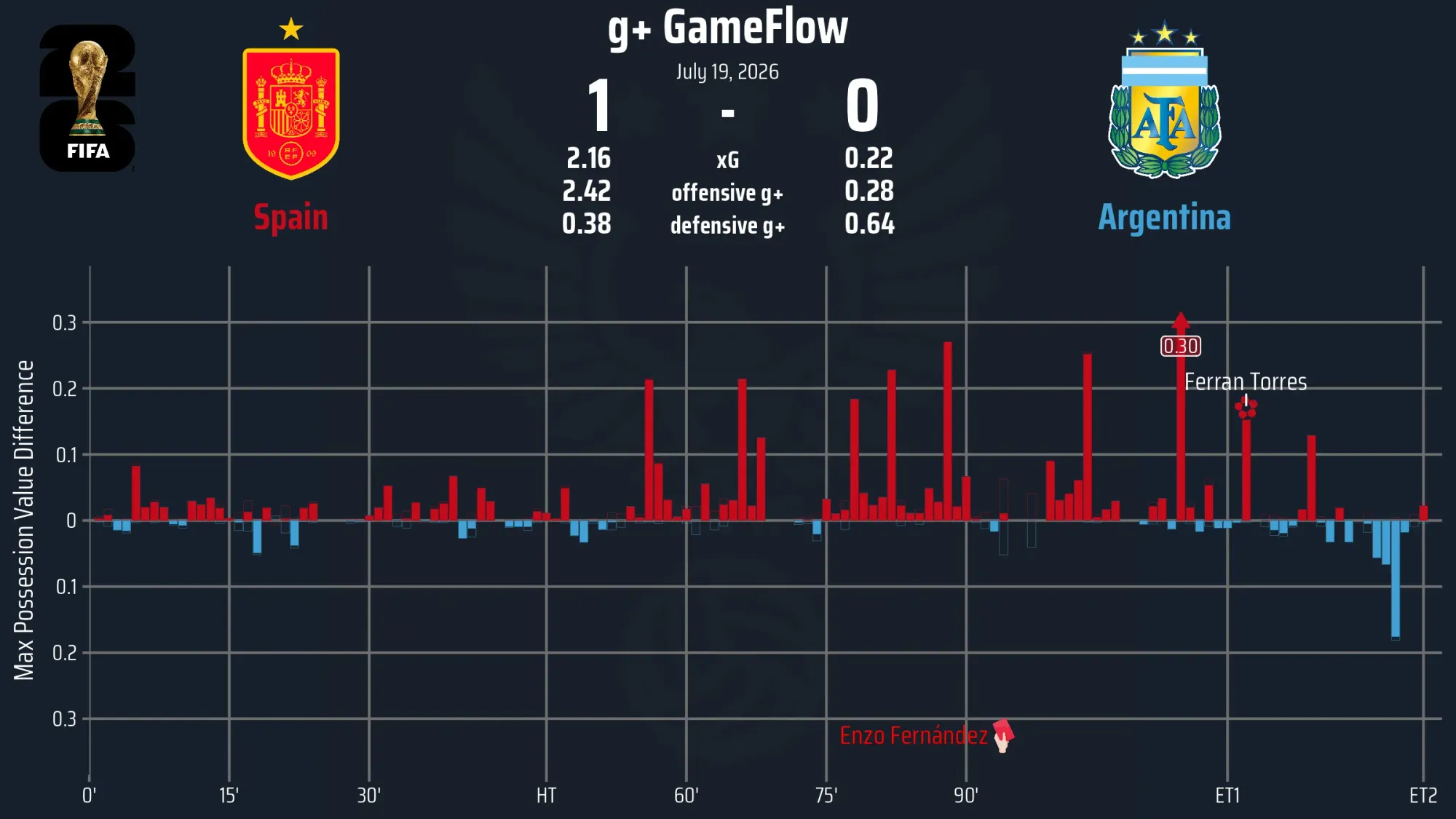
Spain: 2.16 xG, 20 shots, 12 shots on target, 65% possession, 852 passes, 89% pass accuracy, 21 fouls, 9 corners, 0 saves
Argentina: 0.22 xG, 2 shots, 0 shots on target, 35% possession, 464 passes, 77% pass accuracy, 25 fouls, 4 corners, 11 saves
Goals:
• Spain, Ferran Torres, 106'
Attendance: 80,663
Spain saved by subs
You'd be remiss not to mention most of the first half. Only three shots, all by Spain, and capped off with an extended, first-ever World Cup halftime show that featured Ted Lasso introducing Justin Bieber.
Spain was behind Argentina in making subs in this match, with Luis de la Fuente waiting until the 62nd minute to make changes. Argentina's Lionel Scaloni had to deal with an early injury to Lisandro Martínez that forced him into a sub right before halftime, and made three changes before Spain's first.
De la Fuente made two big calls with his first two Spain changes, as Fabián Ruiz made way for Pedri, and as starting striker Mikel Oyarzabal was replaced by Ferran Torres. About ten minutes later, Nico Williams entered the fray by way of Dani Olmo.
These two changes were key for Spain as the second half, plus extra time, unfolded. The Spanish overwhelmed Argentina in shot attempts finishing the second half with 12, eight of which were on target. Plenty of those came from the combination of Williams and Torres.
For a lot of this afternoon in East Rutherford, New Jersey, the deadlock seemed like it would never break. It stayed that way until just after the second 15 minutes of extra time kicked off.
In the 106th minute, a long cross by Pedro Porro to the left post was kept in play and headed back toward the center of the box by Williams. Torres ran onto the ball, connecting for a bullet shot past Martínez that stunned a majority of the pro-Argentina NY/NJ Stadium crowd into silence.
WOULD YOU BELIEVE IT?! SPAIN TAKES THE LEAD IN EXTRA TIME 🇪🇸🤯
— FOX Sports (@FOXSports) July 19, 2026
Ferran Torres gives La Roja the lead!!! pic.twitter.com/hLso0tg3LI
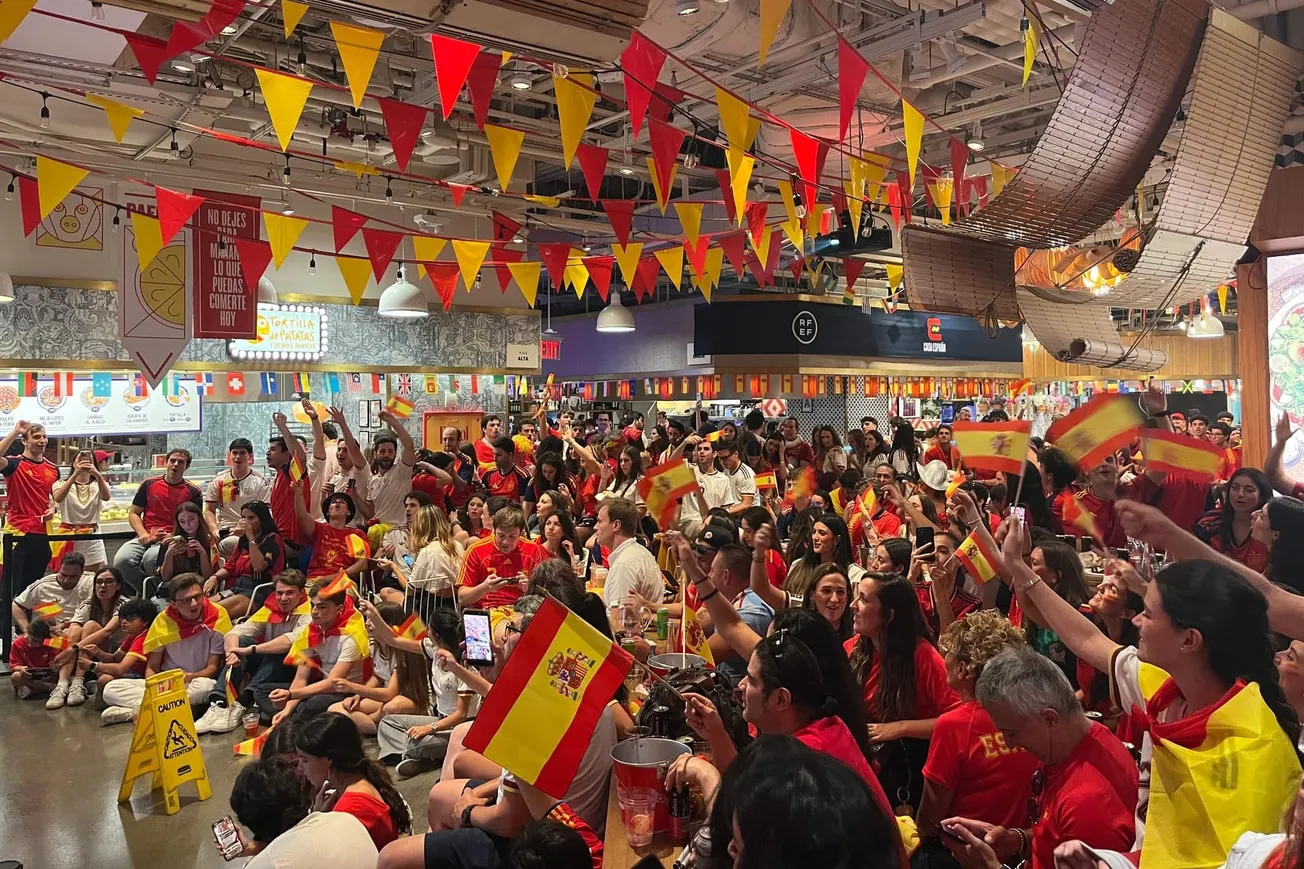
Who wasn't silent? The three sections of Spanish fans above the goal where it happened, and the scattered red kits elsewhere throughout the stadium.
It was enough, and Spain saw the game through until the 120th-minute whistle. It looked as though they'd sealed the win when Torres bagged another goal off a breakaway, but it was called back for offside.
Eventually, after all the other awards got handed out — like Rodri winning Golden Ball as the tournament's best player, Unai Simon the Golden Glove for best goalkeeper, and with Pau Cubarsí named the Young Player of the Tournament — Spain was handed the World Cup trophy by US President Donald Trump and FIFA President Gianni Infantino, who were booed loudly while entering the field for the award ceremonies.
This post is free to all readers. Consider becoming a paid subscriber to support our continued coverage.
Argentina quelled
Argentina's undoing seemed certain even before they went down to 10 men. In a tournament in which Spain had only allowed one goal in seven matches coming into the final, Argentina never made it seem like a seventh clean sheet was in doubt.
That run of goal prevention by Spain set a World Cup record for fewest goals allowed by a champion, besting three teams who had only conceded two goals in previous tournament runs to the trophy: Spain in 2010, Italy in 2006, and France in 1998 on home soil.
The only thing that stopped Spain from running away with a result in this game was the heroics from Argentina goalkeeper Emiliano Martínez. His 11 saves were instrumental in keeping the defending champions in the game, and set a new record for most saves ever made in a World Cup final.
He was used to be being pressured. Argentina had no touches in the Spain box, no corner kicks, and (a common phrase in this recap) no shot attempts on goal. The Spanish imposed their will against Argentina, and while they struggled early on to be truly threatening, the script was there.
The unfortunate reality is that the moment Argentina stopped being invisible was when they were fouling Spanish players, or going to ground looking for fouls of their own. Those caught up to them. A late first-half challenge made Lisandro Martínez the first name in referee Slavko Vincic's book, shortly before Martínez was forced off through injury.
That trademark Argentina aggression that had been present all tournament reemerged early in the second half, as a scuffle ended with substitute Leandro Paredes also getting shown a yellow card.
Then came the big one.
Central midfielder Enzo Fernández was put in the book in the 82nd minute for dissent after arguing with the referee following a blatant dive attempt. Then, in stoppage time, a loose ball landed between Fernandez and Spain defender Pau Cubarsi. The latter got to the ball first, Fernandez made contact, and Cubarsi went flying. Two yellow cards in 10 minutes turned into a man advantage for Spain.
A SECOND YELLOW CARD FOR ENZO FERNÁNDEZ AFTER THIS CHALLENGE AND HE IS SENT OFF 🟥 pic.twitter.com/RGKN2Np1RG
— FOX Sports (@FOXSports) July 19, 2026
Argentina only recovered late in the match after going down a goal. The Torres goal forced the South American's attack to kick into gear.
In the 117th minute, Messi grabbed a bouncing ball 25 yards with a shot that hit Mikel Merino in the face at point-blank range. That was his team's first shot attempt.
The game was nearly drawn level by the defending champions just as the two hour mark hit. After a short free-kick from Messi, Giuliano Simeone hit a low cross that went just wide of the post after being redirected. The ensuing corner kick would bounce to an unmarked Simeone once again, who was unmarked and had Argentina's best look at goal of the match. He skied his attempt well over the crossbar, with the son of Diego Simeone falling to the ground and lying face-first, probably knowing that was the moment.
SKIED OVER THE BAR FOR ARGENTINA 👀 pic.twitter.com/cqaAHhezx3
— FOX Sports (@FOXSports) July 19, 2026
Messi made invisible
Messi, now 39-years-old, looked mortal while on the NY/NJ Stadium grass, the same venue where his missed penalty kick helped Chile beat Argentina in the Copa America Centenario a decade ago.
Messi only touched the ball once in the first 15 minutes of the match — and that was on the opening kickoff.
0 - Argentina are the first ever team to fail to have a single shot in 90 minutes in a FIFA World Cup final.
— OptaJoe (@OptaJoe) July 19, 2026
Blanks. pic.twitter.com/MfI6SwlunG
For the vast majority of regulation, Messi was a non-factor. He barely touched the ball, barely organized plays, and many of the attempts to target him were handled or killed off by Spain before he could make an impact.
Lionel Messi looked like he turned back the clock and defied Father Time during this tournament. But in the final he could not find that same magic.
A few glimpses of the attacking threat posed by the man who led Argentina to glory four years ago came late in the second half of extra time, but it was not enough. Instead, Messi's presumed final World Cup match featured a shot off the face of a defender, no meaningful action near the net, and a few corner kicks that found his teammates, but with those teammates unable to finish.