
The final match of a World Cup group stage tends to be the most nail-biting, gut-wrenching, seat-squirming watch that any American soccer fan can experience.
It's generally an exercise in survival for the Stars and Stripes, with the team often needing a particular result on the final day to advance and keep its World Cup dream alive.
It's the sort of match that’s supposed to create that familiar pit in your stomach, the one you can only feel when you’re defending a one-goal lead in stoppage time, the clock ticking down slower than it ever has, and the opponent drawing ever closer to your goal. Total agony, teetering on the edge of utter ecstasy, with your emotional fate sitting entirely outside the realm of your own control — that’s how a game three usually feels for USA fans.
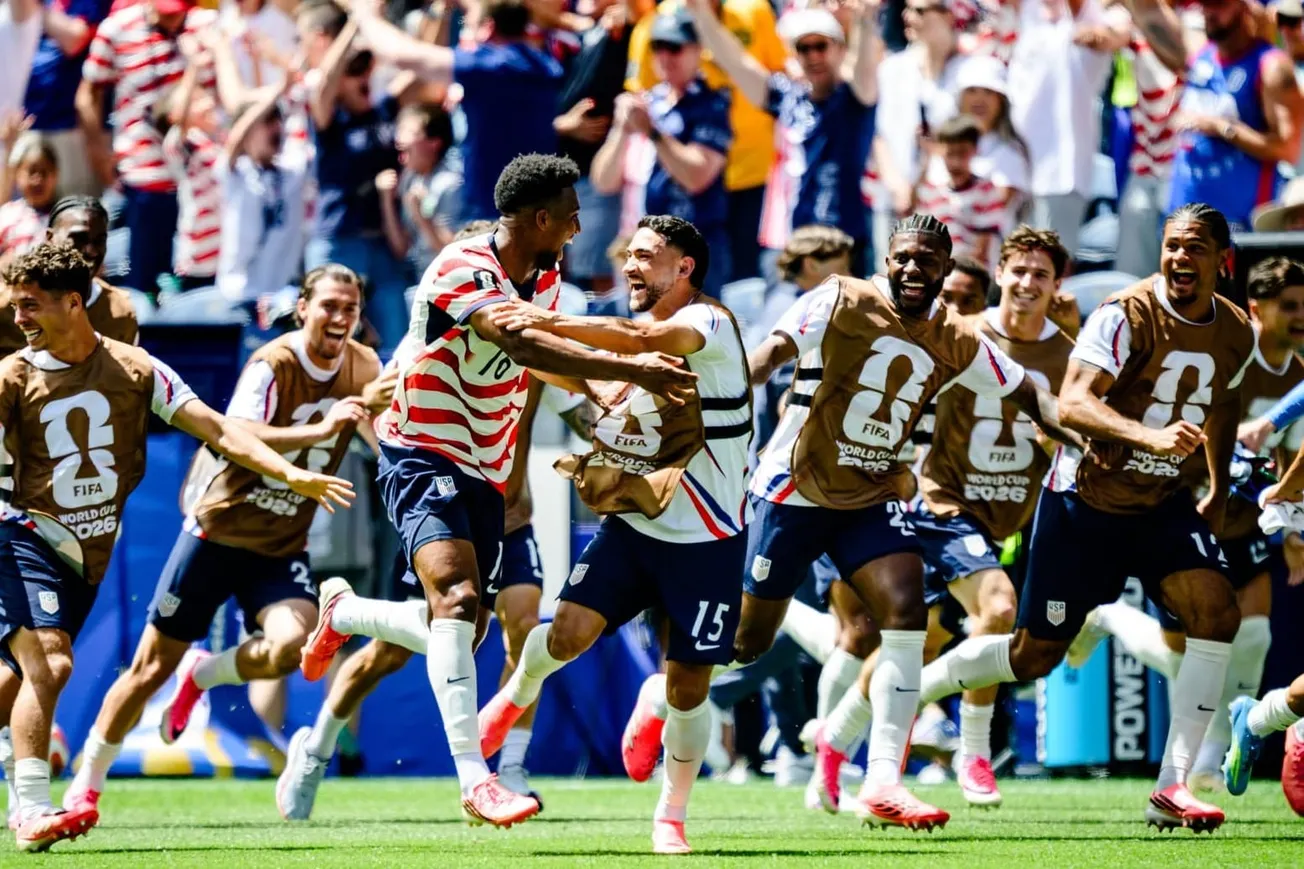
This year, though, off the back of a remarkable start to the 2026 World Cup, the United States’ group-stage finale is nothing but a formality. Their 4-1 thrashing of Paraguay and 2-0 handling of Australia mean the Americans have already clinched the top spot in Group D with a match to spare.
Historic start to this World Cup
With their first-place seeding cemented and their opponents, Türkiye, already eliminated, this Thursday's match in Los Angeles serves mostly as an opportunity for the US to rewrite their record books.
Their consecutive wins to start this tournament already match their highest-ever win total at a single World Cup, having only managed two wins in 2002 when they reached the Quarterfinals and in 1930 when they finished in third place in a 13-team tournament.
It's also only the third time the United States has ever topped its group, doing so in 2010 and 1930. Going into this tournament, the USA had only ever won nine World Cup matches, meaning this squad has already experienced about 18% of the nation’s all-time World Cup wins. Their six goals scored across those two wins mean this 2026 squad is just one goal away from their high-water mark at a single World Cup, having scored seven goals in both 2002 and 1930.
But, of course, "Job’s not finished." With a world-renowned coach in Mauricio Pochettino leading arguably the most talented American roster we’ve ever seen, and with all the games being played on home soil, the bar for this team’s success had already been set a rung or two higher than usual. That pressure is a privilege, but for the sake of contextualizing their play so far, Pochettino’s men can, and should, take this momentary pause in pressure to revel in the success they’ve already found at this tournament.
The evolution of PochBall
Even with the talented squad, high-level coaching, and home-field advantage, this sparkling start was far from guaranteed. In the year or so leading up to the World Cup, real concerns persisted about this squad’s ability to turn its long-held potential into tangible, on-field results.
After crashing out of the 2024 Copa America in the group stages under then-head coach Gregg Berhalter, the United States compiled a lukewarm 14 wins, 2 draws, and 10 losses in The Pochettino Era heading into the World Cup. They failed to win Concacaf’s Gold Cup or the Nations League under Pochettino, two competitions they’d dominated and won under Berhalter, and they’d suffered high-profile losses in international friendlies like a 0-4 loss to Switzerland and a 2-5 loss to Belgium.
Between March and June of 2025, the US suffered a four-match losing streak in which it was outscored 9-3, and did so against four teams ranked lower than the 16th-place Americans in the FIFA World Rankings.
But there were flashes of brilliance alongside the struggles. While Pochettino was notably varied with his squad selection, his tactical vision was more consistent, finding success with a modified back-three beginning in September of last year.
It was a tactical wrinkle that USMNT captain Tim Ream declared a “stroke of genius," and one that helped the US spring to life in a six-match unbeaten run that included wins over future World Cup foes Paraguay and Australia, a draw against a talented Ecuador side, a 2-0 win over Japan, and a 5-1 beatdown of the heavily-favored Uruguay.
That back-three shape continued to evolve as the US drew closer to the World Cup opener. At times, Pochettino’s system got exposed — just ask Jeremy Doku after he ripped the American right flank to pieces in that 2-5 loss to Belgium.
By the time the USA’s last two friendlies rolled around in the weeks leading up to the World Cup, something had clicked. On May 31 in Charlotte, they took down the people's AFCON champions, Senegal, by a score of 3-2 in a match that could’ve easily ended with four or five goals to the Americans. A few days later, they went toe-to-toe with Germany in their final friendly before the World Cup, showing, even in a 1- 2 loss, the Americans had what it took to hang with one of the tournament's favorites.
Rolling those last two friendlies into the first two matches of the World Cup paints the clearest picture of this US team. It represents the final form of Pochettino’s evolving tactical setup, deployed with his final hand-picked 26-player roster.
Through those four matches, the US went 3W-0D-1L and boast a +5 goal difference, with 10 goals scored and five conceded. In that span, they’re outshooting their opponents 59-32, out-possessing their opponents 57%-43%, and sporting a +2.07 expected goal differential.
Even with the loss to Germany mixed in, the rolling stats tell a great story from an American point of view. They’re good enough to demand the ball against high-quality opposition, and, once they have it, they’re talented enough to make you pay. If the game gets muddy, as it did against an extremely physical opponent in Australia, this USA side showed enough fight, grit, and muscle to slug out a victory by brute force. As midfielder Sebastian Berhalter described it, Mauricio Pochettino wants his team operating with the belief that "We're American, we don’t take shit."
What is the USMNT's ceiling?
But where can this American side go from here? This squad just played some of its best soccer in recent memory in front of sold-out crowds in Los Angeles and Seattle, while setting records for USMNT viewership on TV.
While merely getting out of the group stage has been the relative bar for American success at World Cups gone by, doing so with a game to spare in 2026 declares the previous standard obsolete. The immediate reward for their success is a new definition of what success means to this group and this country.
For a casual American soccer fan, or even a non-fan of soccer that rolls around every four years when the World Cup returns, the question often asked about the men’s side usually sounds something like, "Does the USA still suck?"
If the expectation for those fans is for America to win every global sporting competition in which it participates, then perhaps we still do. This USA team, while brilliant through two games, is not yet viewed as a true contender to win this World Cup. On the other hand, what is sport but a vessel to dream?
Dreams aside, those who have followed this sport and this USMNT over the years know that winning this World Cup was never the barometer for this team’s success. But the answer to that "Do we suck?” question has, thankfully, grown easier to answer. We don't!
There were times, like after they failed to qualify for the 2018 World Cup, where this federation did, in fact, suck. Now, less than a decade on from that infamous night in Trinidad, the United States is playing well enough on the biggest stage to flip that question on its head, with the American sports generalist now asking, "Wait, are we good?"
The USA’s first-place finish in Group D ensures they’ll face a third-place team in the World Cup Round of 32, securing what’ll surely be a favorable opponent in their first knockout match.
Knockout soccer is famously unpredictable, and things don’t always go to plan, but this team’s form, this country’s buy-in, and the seemingly favorable road ahead for the United States all suggest that a deep run in the 2026 World Cup is increasingly possible.
The deeper into this tournament they go, and the bigger the opponent this USMNT side can fell, the more this country has a chance to start stripping away its long-held soccer stigmas, both at home and abroad.